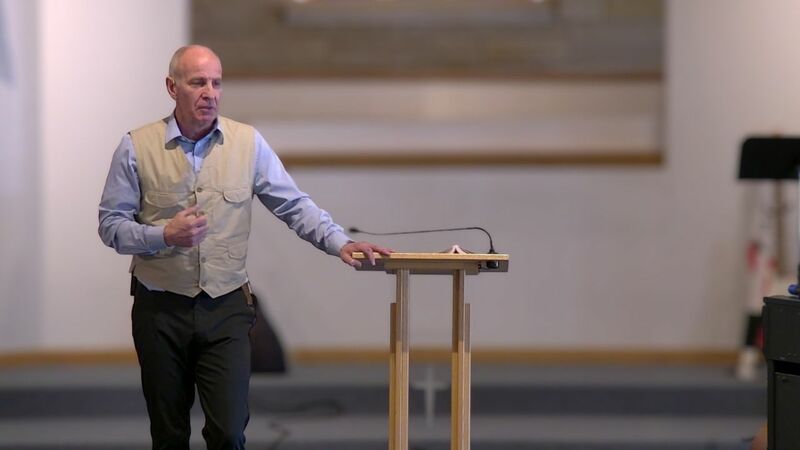
What do you do when the odds are stacked against you and the threat feels overwhelming? In 2 Chronicles 20, we encounter King Jehoshaphat facing exactly that moment. A vast coalition of armies is marching toward Jerusalem, and rather than immediately rallying his troops or seeking powerful allies, Jehoshaphat does something that seems almost counterintuitive: he prays, and he calls the entire nation to fast and wait on God. This sermon draws us into that ancient story and asks us to sit with a profoundly challenging question for our own lives and communities: when we face a crisis, what is our first instinct? Do we reach for the nearest practical solution, or do we turn to God? The spiritual lesson here is not that action is wrong, but that action disconnected from waiting on God can become its own form of idolatry. Jehoshaphat had a real army. He had real resources. But he recognized that his sufficiency was not found in those things. There is something deeply freeing about that posture, and this message invites us to consider what it would look like to live from that same place of dependence and trust.
Jehoshaphat was described as a good king largely because he removed idols and remained committed to God rather than because of his administrative or military skill -- what modern equivalents of idols might we be tempted to trust in when facing challenges as a church or as individuals?
When Jehoshaphat heard about the invading army, his first response was to pray and call the people to fast rather than mobilize his military -- how does that instinct differ from your own first response when you face a crisis, and what does that reveal about where your trust actually lies?
The sermon draws a contrast between acting out of obedience to God's leading and acting out of anxiety over a perceived lack of resources -- how do you personally discern the difference between Spirit-led action and fear-driven action in your own life?
The disciples were told to wait in Jerusalem for the Holy Spirit before going out to change the world, yet they still chose a new disciple while waiting -- what does that tension between waiting and doing reveal about how we handle uncertainty and the desire to feel productive?
The pastor acknowledged that even good leaders like Jehoshaphat sometimes made poor alliances and trusted in the wrong things -- how do you guard against making spiritually compromising decisions when you are under pressure to solve a problem quickly?
The sermon suggests that misdiagnosing a problem -- for example, thinking the answer to a church's challenges is simply more money or more people -- can lead a community away from genuine dependence on God -- what problems in your own life might you be misdiagnosing in a similar way?
Jehoshaphat's prayer in 2 Chronicles 20 acknowledges both God's power and his own powerlessness, saying he does not know what to do but is looking to God for help -- how comfortable are you with openly admitting powerlessness, and what makes that kind of honesty difficult?
The pastor stated that he does not know whether this particular church will exist in fifty years, but expressed confidence in God's promise that the church as a whole will endure -- how does holding that kind of uncertainty alongside that kind of faith shape the way a congregation should make decisions?
The book the leadership team has been reading prompted them to consider whether the church is viewing its challenges correctly -- what assumptions about what a healthy or successful church looks like might need to be reexamined in light of the story of Jehoshaphat?
The sermon closes with an invitation to a month of intentional prayer and waiting before taking action -- what personal or spiritual obstacles might make it difficult for you to genuinely wait on God rather than simply going through the motions of prayer while already having decided on a course of action?