
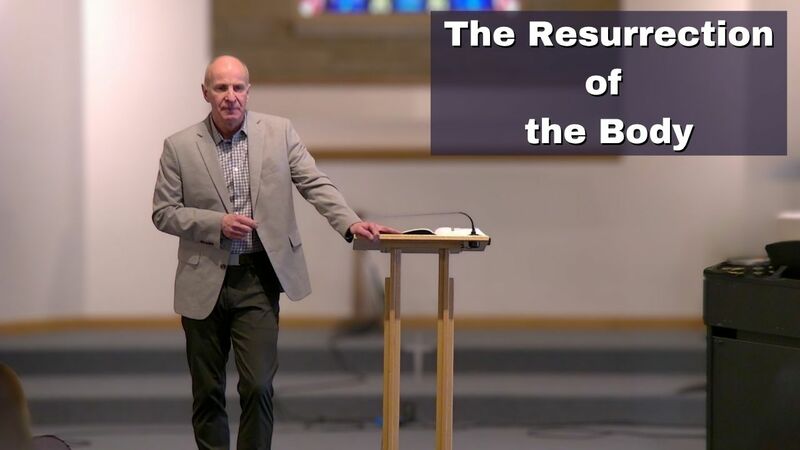
As we stand on the threshold of Holy Week, we're invited to contemplate one of Christianity's most profound mysteries: the resurrection body. Drawing from Paul's first letter to the Corinthians, this exploration tackles the questions that have puzzled believers for millennia: What happens to our physical bodies when we die? How can these fragile, aging vessels possibly fit into God's glorious eternal kingdom? Paul offers us a beautiful analogy from nature itself—the seed that must be planted and die before it transforms into something magnificent. A tiny acorn becomes a towering oak; a small seed becomes a fruit-bearing plant. There's continuity between what was planted and what emerges, yet also dramatic transformation. This is our hope: that God will give us new bodies, not identical to our current ones, but connected to them. These resurrection bodies will be imperishable where we are now perishable, glorious where we now experience dishonor, powerful where we now know weakness, and fully animated by God's Spirit rather than limited by flesh and blood. We cannot inherit God's kingdom in our current state, but through Christ's own resurrection, we're promised bodies fit for eternity—transformed, renewed, and perfectly suited for life in God's new creation.
How does understanding the connection between the crucified Messiah and the risen Lord change the way you view Jesus's death on the cross?
Paul uses the analogy of seeds transforming into plants to explain resurrection. What does this teach us about trusting God with our future bodies even when we cannot fully understand the transformation?
The sermon describes our resurrection bodies as moving from perishable to imperishable, dishonor to glory, and weakness to power. Which of these transformations resonates most with your current struggles or hopes?
What does it mean that our resurrection bodies will be fully animated by the Holy Spirit rather than by flesh and blood, and how might this change our understanding of eternal life?
Paul states that flesh and blood cannot inherit the kingdom of God. How does this challenge common misconceptions about heaven and the afterlife?
The sermon mentions that Jesus's resurrection scars remained visible to his disciples. What might this suggest about which aspects of our earthly lives and experiences will carry into eternity?
How comfortable are you with saying 'I don't know' when it comes to questions about resurrection and the afterlife, and why might this humility be important in our faith?
In what ways are you already experiencing transformation in your life that mirrors the continuity and discontinuity Paul describes between our current and resurrection bodies?
The sermon emphasizes that we need different bodies to inhabit God's new creation. How does this physical emphasis on resurrection differ from popular cultural views of the afterlife as purely spiritual?
As we approach Easter and celebrate Jesus's resurrection, how does the promise of your own bodily resurrection impact the way you live today and face mortality?

.png)