
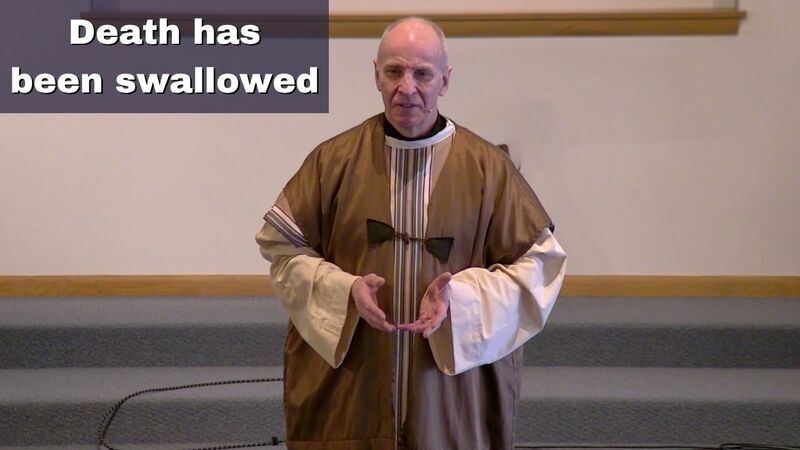
This sermon is told from the perspective of Sosthenes.
Paul names Sosthenes as his brother in 1 Corinthians 1:1
Paul, called to be an apostle of Christ Jesus by the will of God, and our brother Sosthenes, (NIV)
The term brother points to him as a sibling in Christ and a deep relationship. By naming him here, Paul is indicating that he is not simply the scribe for the letter, but was likely in involved in some way in the letter's composition. Paul also reminds his readers with this the value of colleagues in ministry - it is not a solo operation.
The name Sosthenes appears one other place in the New Testament. In Acts 18, Luke narrates the story of Paul's first visit to Corinth which includes his founding of the church there. Part of the story that Luke tells is of a crowd bringing Paul before the proconsul, Gallio, seeking to have Gallio punish him. Gallio dismisses the crowd, telling them their issue with Paul is a religious/theological issue and none of his concern. That part of the story concludes with this line in Acts 18:17
Then the crowd there turned on Sosthenes the synagogue leader and beat him in front of the proconsul; and Gallio showed no concern whatever. (NIV).
There is no clear indication that the Sosthenes named in 1 Corinthians is the same one mentioned in Acts 18. However, a number of scholars suggest it is likely they are the same individual. I am assuming them to be the same person for the message today. Whether they are the same person or not does not affect any theology or the main points of the sermons with regard to the resurrection. The choice to connect the two characters simply provides some background coloring and is based on my own reading and the opinion of several biblical scholars.
This resurrection message takes us into the heart of first-century Corinth through the eyes of Sosthenes, a synagogue leader whose life was transformed by the radical truth of Jesus' resurrection. We're reminded that the resurrection isn't just a historical event to commemorate, but a living reality that fundamentally changes everything about how we live today. The message unpacks how Christ's resurrection accomplishes multiple profound realities: it secures our forgiveness, grants us new life now, defeats our deepest fears, and pulls God's future kingdom into our present moment. What's particularly compelling is the idea that resurrection isn't merely about going to heaven someday, but about embodying kingdom values right now in our communities, relationships, and daily choices. When we grasp that death has been swallowed up in victory, we're freed from the fear-driven existence that so often controls us. The art we create, the kindness we show, the justice we pursue, the reconciliation we practice—all of these become threads that God weaves into His eternal kingdom. This isn't just good news for our souls; it's a revolutionary call to live differently today because the future has broken into the present through Jesus.

.png)